




| For a developing strip on a four-lane street in Wichita, Kansas, NuPenny’s arrival was abrupt. One day the tall glass storefront opened into an empty white room. The next day, it had become a window into a past that never existed, a display of toys fabricated after 50s-era muscle cars, robots, and sleek spaceships, an entire room painted in gray scale. Without an opening or artist’s statement placard, NuPenny still garners both curious looks and distrust. Passersby press their hands to the glass for a better look. Bikers slow and take on quizzical smiles. At dusk, as I stand in front of the 1920s brick building, cars rush along the overpass nearby, and inside NuPenny’s lights kick on, amplifying the surreal nature of this toy store that never opens. Click here to read the entire interview. |
Born in a generation of writers that included the Nobel Prize winners Czeslaw Milosz and Wislawa Szymborska, Tadeusz Rozewicz (1921—) has been known as one of the darkest and most experimental voices of post-war Polish poetry. Sobbing Superpower, translated by Joanna Trzeciak, is the first extensive selection of his poetry to appear in English, and the only one that attempts to span the entity of Rozewicz’s poetic development. READ MORE

Sobbing Superpower: Selected Poems
A selection of poems by Tadeusz Rozewicz
Translated by Joanna Trzeciak
W.W. Norton & Company, 2011
364 pages
Reviewed by Marta Figlerowicz |
|
|
Modern Poetry of Pakistan is a new collection of contemporary poetry translated from Urdu, Panjabi, Sindhi, Pashto, Balochi, Seraiki, and Kashmiri – the seven major languages of Pakistan. This is an important anthology because it is the first to bring as many vernacular poets in translation in a single volume. It successfully complements the representative breadth of its selections with the depth of the poetic experience that it offers. READ MORE

Modern Poetry of Pakistan Selected by Iftikar Arif
Translations Edited by Waqas Khwaja
Dalkey Archive Press, first published 2010
298 pages
Reviewed by Anannya Dasgupta |
|
|
Over the past decade, American poetry may have been luckiest in the patience and devotion of its editors. Writers whose receptions have been limited to regional or aesthetic camps, who have been called poets’ poets, or who have simply faded from view, are suddenly once more in our hands, in collected editions such as Jack Spicer’s My Vocabulary Did This to Me or Jackson Mac Low’s Thing of Beauty. In 2012 we can expect an edition of Joe Ceravolo’s poetry from Wesleyan. This year, David Trinidad has given us the poetry of Tim Dlugos in a remarkable act of service, bringing together all of the work that the poet published in his lifetime as well as much previously unpublished. The resulting volume is an unexpected pleasure and a testament to artistic perseverance. READ MORE

A Fast Life: The Collected Poems of Tim Dlugos
Edited by David Trinidad
A collection of poems by Tim Dlugos
Nightboat Books, 2011
632 pages
Reviewed by Justin Sider |
|
|
The cover of The French Exit, Elisa Gabbert’s first full-length collection of poems, depicts a woman’s face disintegrating into pixels. The text on the cover, too, is pixellated—the “X” in “Exit” a criss-crossed matrix of squares, all the B’s and S’s angular, digitized, like on an old Texas Instruments calculator screen. The overall effect is at once archaic and au courant, and as such there’s something disjunctive about it—technology (the zoom-in, the ultra-close-up) revelling in its own pixellated deficiency. READ MORE
The French Exit
A Collection of Poems by Elisa Gabbert
Birds, LLC, 2010
72 pages
Reviewed by Ali Shapiro |
|
|
W. K. Wimsatt, the New Formalist critic, opened his famous essay, “What to Say About a Poem,” with an assumption Sandra Doller’s newest book of poetry seems positioned directly against. Wimsatt wrote, “At the outset what can we be sure of? Mainly that a poem says or means something, or ought to mean something.” In Man Years, “meaning” is poetry’s predetermined enemy. With a sensibility influenced by the Language poetries of Rae Armantrout — who writes in praise of Doller’s “pinball wizard” deftness on the book’s back cover — and Charles Bernstein, Doller writes poems as syntactically liberated as they are emotionally arrested, as theoretically serious as they are slap-stick silly. Because the voices and attentions of this book are not of a single, placid mind, there is no point in pursuing a reading of it that would culminate in a single, placid meaning. Doller is a champion of the untidy, of the disorderly universe we would encounter daily if we dared to look hard enough. READ MORE
Man Years
A Collection of Poems by Sandra Doller
Subito Press, 2011
87 pages
Reviewed by Robert Whitehead |
|
|
Visit the MAKE store to purchase this double-sided tote (the opposite site features and illustration by Aya Yamasaki). The tote is also available at Renegade Handmade in Chicago and Iowa City’s White Rabbit.
i
If the protestors of the Occupy movement ever decide to nominate a poet laureate, writer and translator Daniel Borzutzky would certainly make a compelling candidate. A writer and translator of Chilean descent who lives and teaches in Chicago, Borzutzky’s latest volume The Book of Interfering Bodies—his third book after Arbitrary Tales (2005) and The Ecstasy of Capitulation (2006), which are, respectively, collections of fiction and poetry—is very timely, and it constitutes his most ambitious and unified project to date. To be clear, the brand of ironic subversion Borzutzky invents in his latest volume probably doesn’t resemble the present populist resistance as it is usually formulated. Rather, in this new book on the fate of the human imagination in the postindustrial West, Borzutzky writes what might be called bureaucratically occupied poetry. READ MORE
The Book of Interfering Bodies
A Collection of Poems by Daniel Borzutzky
Nightboat Books, 2011
103 pages
Reviewed by Kevin C. Moore |
|
|
“The language with which you will tell the story of your times”
Dorfman’s Feeding on Dreams provides a timely look at dictatorship, language and memory
The thrust of Ariel Dorfman’s newest work Feeding on Dreams: Confessions of an Unrepentant Exile is instinctual. In it, he sets out to do what every mortal would, given the chance: tell his or her own story, in his or her own terms. READ MORE
Feeding on Dreams: Confessions of an Unrepentant Exile
A Memoir by Ariel Dorfman
Houghton Mifflin Harcourt, 2011
352 pages
Reviewed by Erin Becker |
|
|
“You can always count on a murderer for a fancy prose style,” says Humbert Humbert, the pedophiliac protagonist of Vladimir Nabokov’s Lolita. And murderers aren’t the only ones. Authors ranging from the Marquis de Sade to Edgar Allen Poe to Chuck Palahnuik have relied on similar tricks, juxtaposing the abhorrent behavior of their characters with irresistibly lovely language, daring the reader to fall under the poetic spell and into the seductive consciousness of every variety of sadist, fetishist and psychopath. READ MORE
The Necrophiliac
A Novel by Gabrielle Wittkop
Translated from the French by Don Bapst
ECW Press , 2011 (first published 1972)
91 pages
Reviewed by Ali Shapiro |
|
|

Geoffrey Hamerlinck (illustrator MAKE 9, 10, 11) made this awesome animation and projected it across the wall at the issue #11 release party. Guest appearances from characters from his issue #11 illustration for Timothy Schaffert’s story “The Boy and the Girl in the Honeymoon Suite.”
Relax, keep watching….
Join MAKE and over 40 other publishers and literary organizations at the first ever Chicago Book Expo, November 19 & 20.
Chicago Writers House, in partnership with Uptown United, presents Chicago Book Expo 2011, a pop‐up bookstore and literary spectacle in Chicago’s Uptown neighborhood. The event takes place November 19–20 and introduces more than 40 Chicago publishers of fiction and poetry to Chicago’s general readers. For more info, click here.

Jakob Arjouni has been hailed – mainly in Germany – as the successor to American crime fiction masters Dashiell Hammett (The Maltese Falcon and The Thin Man) and Raymond Chandler (The Big Sleep and The Long Goodbye) since the release of his first novel, Happy Birthday, Turk! in 1987. Arjouni picks up the tradition of “hardboiled” private eye crime fiction Hammett and Chandler made popular in the 1920s and1930s, respectively, creating a dark, seedy world and an unorthodox private detective whose morals and actions may be as suspect as the criminals he pursues for money. READ MORE
Happy Birthday, Turk!
A novel by Jakob Arjouni
Translated from the German by Anselm Hollo
Melville House, 2011 (first published 1987)
176 pages
Reviewed by SD Alison |
|
|
Congratulations to MAKE #9 contributor Kate Zambreno whose essay Slapping Clark Gabel was listed as a notable essay by series editor Robert Atwan in Best American Essays 2011. Read the essay online here.
Congratulations are also in order for Luis Sepulveda whose short story A House in Santiago (translated by Paul Grens) was selected as a notable by series editor Dave Eggers and the 826 Kids in Best American Nonrequired Reading 2011.


In 1884, Paul Verlaine published his ground-breaking essay and anthology, “Les Poètes maudits.” The three original “damned” poets were Tristan Corbière, Arthur Rimbaud, and Stéphane Mallarmé. Perhaps the most famous nineteenth-century French poet after Victor Hugo and Charles Baudelaire, Rimbaud has been translated frequently and well (most recently in an edition of Illuminations by John Ashbery) and attracted the notice not only of poets but of pop singers, too (Jim Morrison and Patti Smith have numbered among his admirers). Mallarmé, more hermetic, rarified, and often difficult to translate, remains a recognizable figure—an exemplar of both “pure poetry” and typographical experimentation. In spite of his acclaim by various American modernists, Corbière has never achieved the same appeal. T.S. Eliot listed him among those poets without whom he could not have written, and in 1920, Ezra Pound called him “the greatest poet of the period.” Nonetheless, he has remained primarily, like Jules Laforgue, a reference point for American modernism, a peculiar taste from a peculiar age rather than required reading. READ MORE
Poet by Default
Poetry by Tristan Corbière
Translated by Noelle Kocot
Wave Books, 2011
22 pages
Reviewed by Justin Sider |
|
|

MAKE: A Literary Magazine Issue 11 “Neither/Nor” Release Party
Friday, October 28. Doors at 7 p. m. / Show starts at 7:30 sharp!
Rational Park, 2557 W. North Ave
$8 suggested donation—can be used toward the purchase of an issue or a subscription. (No suggested donation for current subscribers.)
21 yrs +
•Short readings and ruminations from issue #11 contributors Janet Desaulniers, David Raskin, Spencer Hendrixson, Zeena Barazanji, Laura Goldstein, Benjamin David Van Loon, and Dylan Nice
• Animation installation by illustrator and #11 contributor Geoffrey Hamerlinck
• DJ Nathan Hinshaw of Let’s See Other People
• Special guest MCs– comedian Adam Burke and rabble-rouser Ramsin Canon
• Special late night appearance by Rachel Mason of Little Band of Sailors
• Bevs and candy galore
Facebook invite
The Roman poet-philosopher’s basic premise in The Order of Things, one he takes pains to derive from Epicurus and to distinguish from the claims of other pre-Socratics, is that the world is made of infinite space and of loosely moving tiny atoms that alternately bunch together and fly apart. There is no purpose to their motion beyond mere accident. No purpose—most emphatically, no anthropocentric purpose—is also inherent in the increasingly complex living things these atoms sometimes cluster into. READ MORE
De Rerum Natura – The Nature of Things
A philosophical poem by Lucretius
Translated from the Latin by David R. Slavitt
University of California Press, 2008
320 pages
Reviewed by Marta Figlerowicz |
|
|
“Opera,” writes Herbert Lindenberger, “is the last remaining refuge of the high style,” while movies, according to Stanley Cavell, arise “from below the world.” Somewhere in the mix of high and low, old and new, epic and profane, elite and populist, and technological and pre-technological, Marcia Citron finds the subject of When Opera Meets Film, the latest of a recent flourishing of academic books that break ground on a substantial topic and a fascinating repertory. While opera scholarship has been around for centuries, and film scholarship is as old as the medium itself, only recently have academics (generally musicologists, though the philosopher Stanley Cavell is a commanding presence) tackled the peculiar courtship of two art forms that seem, on the surface, to stand at odds. How to reconcile movies, the exemplary twentieth-century art, with opera, whose grandiloquence and earnestness in the face of absurdity recall an earlier epoch? And how to relate opera’s distant faces and resonant voices to film’s whispered close-up? READ MORE
“I take SPACE to be the central fact to man born in America,” wrote Charles Olson at the beginning of Call Me Ishmael, his mythopoetic account of Melville’s Moby Dick. And Wallace Stevens, in “The American Sublime,” argued that in this country the sublime comes down to “the empty spirit / in vacant space.” In their accounts of American “space,” both poets were situating themselves within the native tradition of Romanticism associated with Emerson, Thoreau, Whitman, Dickinson, Melville and Hawthorne. Their interpretations of the American nineteenth-century have fed a small but vital poetic tradition, in which we might include, among others, Ed Dorn, Jack Spicer, Susan Howe, and Peter Gizzi. READ MORE
Circle’s Apprentice
Poetry by Dan Beachy-Quick
Tupelo Press, 2011
90 pages
Review by Justin Sider |
|
|

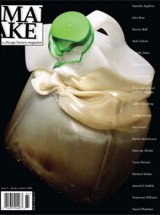
Sarah Conaway, The Vision, 2008, Archival inkjet print 30” x 40”
Line from Speech Acts 11–13: I am a conjunction by Janet Desaulniers
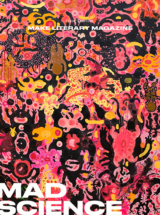
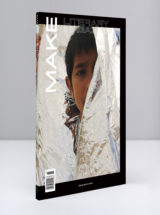
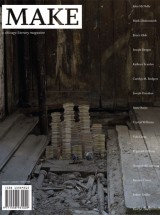
Featuring…Nonfiction by Freya Gibbon /Kara J. Searcy/ Ira Sukrungruang/ Dylan Nice /Janet Desaulniers /Dot Devota/Beth Peters/ Zeena Barazanji/ Spencer Hendrixson /Louisa Wolf
Fiction by David Unger /Elizabeth Crane/ Timothy Schaffert/ Benjamin David van Loon /Curtis VanDonkelaar/ Megan Martin/ Jac Jemc /
Poems from Laura Goldstein/ Karina Borowicz/ Wendy Xu /Anthony McCann/ Mathias Svalina /Nate Pritts /Patricia Lockwood
Interviews with David Raskin / Kumail Nanjiani
Book reviews by Devin King /Chris Brunt/ Mary Wilson Meredith Aska McBride
Visual art portfolios from R.E.H. Gordon/ Borden Capalino /Margot Bergman
Original story art illustrations by Geoffrey Hamerlinck/Aya Yamasaki /Rusty Shackleford/Peter Hoffman/Iris Shaw-Williams and Mei-Ling Shaw-Williams
Do you have a subscription? (No, but you’d like to subscribe?) Have you moved recently? Please let us know: editors at makemag.com. Mags will ship the third week of October.
They are in the mail!
“Wait, I thought this was the summer/fall issue?” Initially, it was to be. However, sometimes we need a little more time. We’re all volunteers, you know. Though we really like to stay on schedule, we don’t want to compromise the quality of the magazine. We don’t want to rush the editing, proofing or the layout–that wouldn’t be fair to the contributors or to you, the reader. We’re super excited about this issue, and we think that you’ll agree that it’s worth the (lil’) wait.
As a subscriber, you’ll automatically join the SubPubClub. How about that?
Robert Duncan’s heresies are innumerable. Often overlooked in his poetry as the pardonable consequence of a theosophical upbringing, the publication of his massive scholarly appreciation of Hilda Doolittle throws light on the depth and extent to which the poet was committed to religious dissent and poetic nonconformity. Even those who have long appreciated Duncan’s poetry might be surprised to learn what this work shows him to have actually believed about his own art. READ MORE
 |
The H.D. Book
A work of poetry criticism by Robert Duncan, edited by Michael Boughn and Victor Coleman
University of California Press, 2011
678 pages

New Selected Poems and Translations
A collection of poetry by Ezra Pound, edited by Richard Sieburth
New Directions Publishing, 2010
391 pages
Review by Edgar Garcia
|
|
|

|
An Interview with Gabriel Gudding
By Joyelle McSweeney |
I read Gabriel Gudding’s Rhode Island Notebook over three days this past February, nearly holding my breath the whole time. The book is 435 pages long. Three days and 435 pages are a long time to hold your breath. But I was captivated by the feat of endurance recorded in the book: Gudding wrote it by hand, in his car, while driving, during three years’ worth of grueling commutes between Normal, Illinois and Providence, Rhode Island, to visit his young daughter. As the title suggests, Rhode Island Notebook is in notebook form, recording the advance and retreat of each journey, the dripping gas stations, fast-food fish sandwiches, and radio evangelisms consumed along the way as well as/notwithstanding the allegorical political hallucinations, the odic leaps, the classically modeled meditations on profane topics and the autobiographical turns, which line the mundane interior corridor attaching these two points. The diversity and unity of the work as a whole, its breadth of topic, its lyric and intellectual intensity, its humor and humanity, make for what admen might call “a thrilling read.” I interviewed Gudding via e-mail about the ways and means of Rhode Island Notebook in March 2008. READ MORE This interview originally appeared in MAKE issue #6.
The second quarter of The Wide Road, Carla Harryman and Lyn Hejinian’s strange, charming, picaresque “novel,” consists of epistolary correspondence between the book’s authors. These letters comment on the work we are reading, even as they evoke an enviably intelligent creative partnership. “We seem,” writes Hejinian to Harryman, “to be particularly given to unlikely linkages, to exciting mismatches, to the creative (playful, powerful, funny, mournful) co-existence of live incommensurabilities.” This is as good a gloss on a prominent tendency within the Language poetry movement generally (of which Hejinian and Harryman are founding members) as it is on The Wide Road itself. The Wide Road locates in the genres of travel-writing and of the picaresque happily fertile ground for such “live incommensurabilities”: “There is no analogous flattened happiness to that of curious and receptive travelers. Indeed, the morning bowed informally to us from the wide road which was filled with things to be coupled and compared.” READ MORE
The Wide Road
By Carla Harryman and Lyn Hejinian
Belladonna, 2011
92 pages
Review by Len Gutkin
|
|
|
Gapersblock.com‘s Michael Workman discusses the tenth anniversary of the Danny’s Tavern Reading Series with co-founder and curator, Joel Craig–who also happens to be the poetry editor for MAKE.

Reviewing Rae Armantrout’s work after her last book, Versed (2009), won the Pulitzer Prize and the National Book Critics Circle Award is a decidedly different affair than it might have been, say, four or five years ago. Not that anything has changed radically in her style or content. Her poems are still terse, elliptical fragments. They still interrogate identity, voice, language, politics, sex, media, capital. At their best they still buzz like Emily Dickinson’s fly between us and the light of our casual assumptions. Reviewing Armantrout’s new work is different now because those awards and the reviews that followed make her the most recent in a line of experimental poets to find her work applauded and more widely circulated by the center, aesthetically speaking, of the poetry community, and, as such, she has also become a cipher for the shifting terrain of contemporary verse. One is obliged to comment. READ MORE

Wednesday, August 24th
7:30PM at Danny’s Tavern
Celebrate the tenth anniversary of The Danny’s Reading Series with poetry from MAKE contributor Anthony McCann, along with Jessica Savitz and Jason Bredle.