Interview

Interview with E. J. McAdams
by Mark Molloy
by Mark Molloy

Get future issues or buy back issues.
Make a tax-deductible donation today and help us continue to publish online and in print. No contribution is too small.
via-email, October 2008
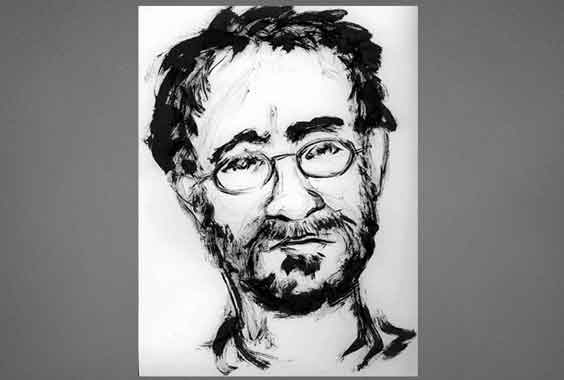
Tom Bissell, originally a Michigander (and Yooper to boot), has gottena reputation as a “travel writer” thanks primarily to two of his nonfiction works, Chasing the Sea: Lost Among the Ghosts of Empire in Central Asia and The Father of All Things: A Marine, His Son, and theLegacy of Vietnam. But Bissell also helped engineer a renovation of the travel genre. In the much-acclaimed Father of All Things, Bissell takes a tour of Vietnam with his father, a Vietnam vet, and delves as much into the characters forged from the Vietnam experience—his own and his fathers—as into the locales he visits. By refusing to affect an impossible objectivity, the book actually ends up providing a much more textured “travelogue” that serves both to bring a distant place and time to life and to generate a compelling interpersonal narrative. In Chasing the Sea, Bissell catalogued the death of the Aral Sea as a result of a multilateral imperialism. But the power of the book comes from an Orwell-like frankness about the cultures and lives he encounters; there are no murdered metaphors meant to explain broad historical trends. Bissell is able to be a “writer who travels” rather than a “travel writer”, and in so doing invigorates a genre prone to cliché exhaustion. Bissell has written for McSweeney’s as well as Harpers and is currently working in Estonia.
Ramsin Canon: Your work, particularly The Father of All Things is pretty intensely introspective. How does traveling, or unfamiliar locales and crossed boundaries, impact your ability to look inward?
Tom Bissell: For me, travel is like a constant reminder of who I am, what I believe in, what’s important to me, and why I do what I do. Travel is the constant experience of difference, which in turn leads deep, introspective mental spelunking. When you’re home, you’re not receiving nearly as many bits of incoming information. Actually, you are, but you simply don’t notice as many because, chances are, you have become inured to the reality you’re accustomed to. In a new place, everything from car horns to doorknobs is fascinating. The shape of public restroom urinals is one thing I always notice. Every place has urinals, but no place has urinals that look alike. Another interesting thing about travel: When you do come home, you start noticing the weirdnesses of deeply familiar things. Redmond O’Hanlon once said that he stops noticing things about new places after six months. I would agree. Six months in, even the strangest people or place begins to lose the shimmer of unfamiliarity. This is probably why I’m a serial traveler. I’m all but addicted to newness.
RC: Do you see boundaries–international, interpersonal, geopolitical and natural–as challenges that help you to see more clearly? I’m interested in what compels your wanderlust in the context of your objectives as a writer.
TB: I don’t know, really. I’m not even sure if they’re connected. I mean,they’re connected in the sense that I write about travel often, but I wanted to be a writer long before I wanted to be a traveler. What travel has done for me as a writer, I think, is given me access to subject matter that I would not otherwise have had. I didn’t becomethe writer I am until after I started to travel a lot. I probably would have still been a writer–at least, I hope so–but I sometimes wonder what kind of stuff I would have written about, or if it would be as fun to write. Possibly it would be. This is just another boundary, isn’t it? I think every boundary exists along a spectrum of real and artificial, and they shift depending on context. I have what is possibly a very romantic, naive view of writing as a border-collapsing force, a thing that allows people the recognition of what we all share–or at least the hope of what we all might share.
RC: You’re in Estonia right now, and have had a focus on the dissolution of the Soviet Union across some of your work. Is there a unique lesson you think the peaceful–or “peaceful”–dissolution of a world superpower has for people?
TB: I talk to my Estonian friends here, and what I get in return are simply astounding stories of what so many people my age (34) went through growing up. One friend’s father went to Siberia for what’s called a “tenner” (ten years) for some mild anti-Soviet underground newspaper work. Another friend’s father was a KGB agent who defected to the West. When he was a little boy, he’d sell the Finnish garbage (Coke bottles, plastic bags) that washed up along the shore of Estonia on the streets of Tallinn and make as much in a day as most people earned in six months. No kidding. And then, when these people were in high school and college, the one single most overriding fact of their existence disappeared. They were free. But with freedom came no small amount of social derangement, which is milder in Estonia than a lot of places, yes, but which still persists here. I’ve never been to a place with as much simmering anti-Russian and pro-Russia sentiment. Estonia actually had the lowest fluency-in-Russian rate of any Soviet republic, and a horrifyingly small number of Russians speak Estonian today (this is changing for the younger generations), which means this place is about as divided as a functioning society can be. Totally different from my experience in Uzbekistan, say, where independence was greeted with much more fear and trembling. In my experience, the more highly educated an ethnic Uzbek was, the likelier that person was to live and function in Russian. Not so here. The more educated a person is here, the less likely they are even to want to speak Russian. There are all sorts of historic reasons for this disparity, but it has suggested to me that the “peaceful” in “peaceful dissolution” very definitely needs quotes around it. The experience was just so different in every part of the Soviet Union and often camouflaged all manner of psychic trauma. In terms of the people it affected, you can’t really say anything definitive about the Soviet collapse – which is itself a nice reminder of the inadequacy of cookie-cutter ideas about “democracy” and “freedom.”
RC: World travel isn’t common for people outside the industrialized world. In Chasing the Sea you write about the travesty of the Aral Sea and imperialism in Central Asia; given the impact Western nations have on the rest of the world, are the stakes higher for journalists and writers who tell stories of foreign places?
TB: If by “stakes” you mean the potential for misunderstanding a foreign place, and then, in turn, misleading readers about that place, maybe so. But when I really think about it, probably not. Writing on any topic is perilous. You want to get it right no matter what you’re writing about. And you almost never do, because there is always someone who will complain that you’ve missed the point. My experience with places, whether Vietnam or Estonia or New York City or my hometown, is just that: my experience. I really try to shy away from the grand statement when it comes to different cultures and nations. I try to keep everything as solidly and honestly subjective as I can. That’s all I think objectivity is: honest, self-questioning subjectivity. And at the end of the day, a piece I write about….Laos, for instance, even if it’s published in a place like Harper’s or The New Yorker, is not exactly going to set the agenda, because I don’t write agenda-setting pieces; I write personal pieces. So the “stakes” to me are always personal and literary ones, not political ones. But, since the West has such a disproportionate ability to impact the rest of the world do the stories journalists bring back from the rest of the world have particularly higher stakes? Thomas Friedman famously wrote about a destitute woman in Vietnam who was hustling money by using a broken-down scale and offering to weigh you. He celebrated this as a paean to globalization and the entrepreneurial spirit. Oh, wow. I remember that Friedman bit, and further recall that I sat there staring at the page, for several minutes, trying to figure out if he was being satirical or not. Again, though, my journalism is, for me, a personal account, not a brief, and so while I understand what you’re getting at, and why you’re asking, the question doesn’t resonate with me. It’s not part of my approach, or one of my concerns, which I am fully willing to recognize might, in fact, be a weakness of my approach.
RC: Back to your point earlier about social derangement requiring us to put the peaceful in “peaceful dissolution” in quotes. Your articles and books have been lauded for weaving a historical narrative with a personal one (and a quasi-fictional one). The flatness of international journalism gets us in the habit of defining anything that isn’t outright war as “peaceful”–does the use of personal stories and fictionalized retelling make your travel writing more real, or less so?
TB: It’s an odd thing that many of the writers who are attracted to the so-called wider world are in many cases people who don’t care for the more shall we say gossamer aspects of writing: pretty sentences, lyricism, and so on. I’m not sure why this is. It probably has its origins in the strong journalistic background most travel writers come out of, in which the “story” is the focus and the writer’s personality must fall in subordination to it. I haven’t had a journalism class in my life. As I’ve said before, I really don’t know the first thing about journalism (which some critics of my writing have been happy to point out!). I became a journalist wholly by accident. So my bag of tricks is a little bit different than the typical travel writer’s, I would say. I’m also not particularly scandalized by the idea that narrative nonfiction has all sorts of invention in it (which is not, let me stress, the same thing as making shit up). I believe in a fourth genre, as practiced by the likes of Paul Theroux and Robert Byron and Ryszard Kapuscinski and Redmond O’Hanlon, in which nonfiction has the texture and propulsive narrative qualities of fiction. Not only do I believe in that genre, I’ve done my best to add to it in what ways I can. Two of the best travel writers working are Eliza Griswold, who’s also a poet, and Kira Salak, who I believe comes out of an academic background, and their work has a very different flavor. A poet writing about the developing world? A PhD in English literature canoeing an African river? Their work flies in the face of so many preconceived notions of “travel writing” and “journalism,” which is why I like it as much as I do. I wish more travel writers wrote more beautifully, and I wish more writers capable of beautiful prose left the house a little bit more.
Originally from Chicago, Ramsin Canon is a writer and attorney based in San Francisco, CA.

















click to see who
MAKE Magazine Publisher MAKE Literary Productions Managing Editor Chamandeep Bains Assistant Managing Editor and Web Editor Kenneth Guay Fiction Editor Kamilah Foreman Nonfiction Editor Jessica Anne Poetry Editor Joel Craig Intercambio Poetry Editor Daniel Borzutzky Intercambio Prose Editor Brenda Lozano Latin American Art Portfolio Editor Alejandro Almanza Pereda Reviews Editor Mark Molloy Portfolio Art Editor Sarah Kramer Creative Director Joshua Hauth, Hauthwares Webmaster Johnathan Crawford Proofreader/Copy Editor Sarah Kramer Associate Fiction Editors LC Fiore, Jim Kourlas, Kerstin Schaars Contributing Editors Kyle Beachy, Steffi Drewes, Katie Geha, Kathleen Rooney Social Media Coordinator Jennifer De Poorter
MAKE Literary Productions, NFP Co-directors, Sarah Dodson and Joel Craig